developed by german-russian climatologist wladimir koppen (1846-1940) and tweaked by german climatology rudolf geiger (1894-1981), the koppen-geiger climate classification system is used to categorize and communicate basic information about different regions of earth. dividing our planet's climates into 5 main groups based on patterns of seasonal precipitation and temperature, the system assigns up to 3 letters to a certain type of climate.
| first letter main group | second letter seasonal precipitation subgroup | third letter temperature subgroup |
|---|---|---|
| A - tropical | f - rainforest m - monsoon w - savanna dry winter s - savanna dry summer | tropical climates are assigned no temperature subgroup |
| B - arid | W - arid desert S - semi-arid steppe | h - hot k - cold |
| C - temperate | w - dry winter f - no dry season s - dry summer | a - hot summer b - warm summer c - cold summer |
| D - continental | w - dry winter f - no dry season s - dry summer | a - hot summer b - warm summer c - cold summer d - very cold winter |
| E - polar | T - tundra F - ice cap | polar climates are assigned no termperature subgroup |
koppen was a botanist, or he studied plants. so, his classification groups were actually made with particular reference to vegetation. at first, his climate group C (shoutout) was too general, so it was expanded upon by an american geographer in the late twentieth centruy.
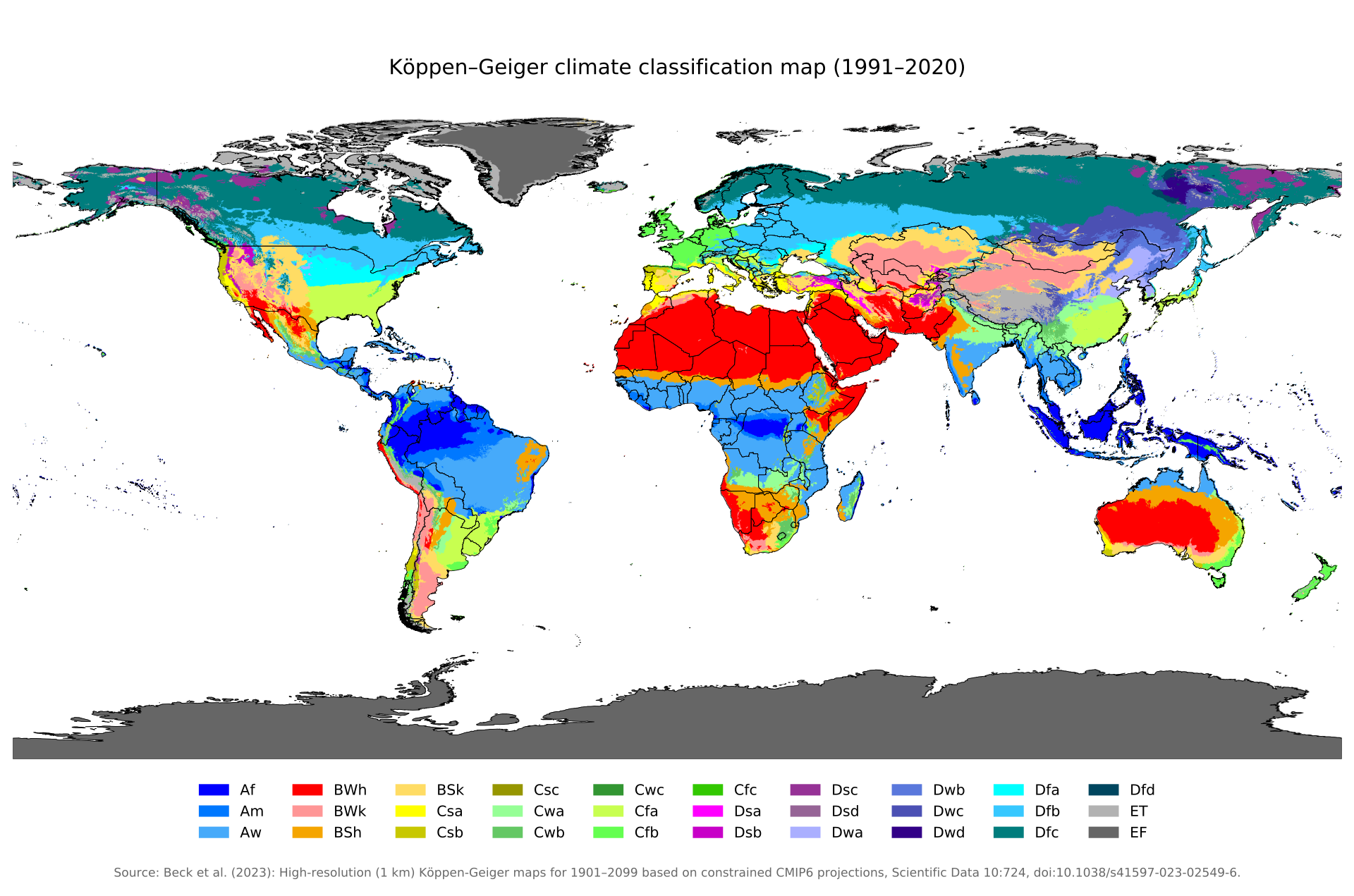
boston's climate is Dfa, hot-summer humid continetal (that's read in reverse order), bordering on Cfa, humid subtropical. according to wikipedia, Dfa climates usually occur in the high 30s and low 40 latitudes, with a qualifying average temperature in the warmest month of greater than 22 °C (72 °F). these climates exist only in the Northern Hemisphere (!) because the Southern Hemisphere has no large landmasses isolated from the moderating effects of the sea within the middle latitudes. (!!) by definition, forests thrive in humid continental climates, and you can find maple, spruce, prine, fir, and oak trees. Not quite a subarctic climate, there's more than just conifers! why isn't Boston quite Cfa? too cold, just too far north. head equatorward, down the East coast of North America, and that's what you run into next.
across the world, boston is most similar to:
the ocean is a heat sink! the ocean absorbs the majority of the radiation that earth receives from the sun. of course land and gas in the atmosphere play this role as well, but water has a high heat capacity! this is because water has a high specific heat, or it takes a lot of energy to increase its temperature a degree-- the most, actually, out of any liquid. the polar hydrogen bonds require a good deal of energy to break, so when heated the energy goes there instead of towards molecular motiopn, which would increase temperature. so water takes a while to heat up, sure, but also cool down-- so it holds on to the heat. at a heat capacity of 5x that of sand, water is much more resistant to sudden temperature changes, making it a lovely habitat for the fish. us being made of mostly water or whatever (about half by weight) is also surely not a coicidence. #homeostasis. finally, as you know, ocean water is always moving. maybe you don't realize it does so in these large strokes, though, look!
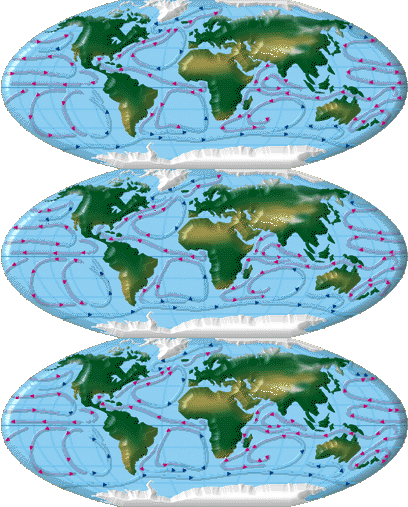
can you see how the currents are like a conveyor belt of power?
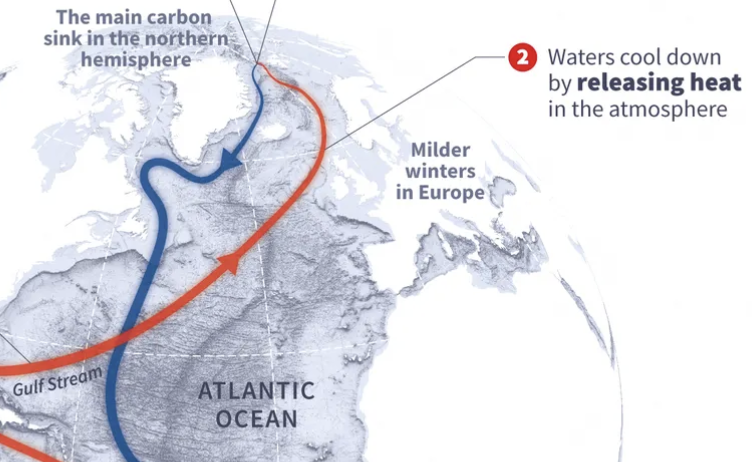
when ocean water moves around the globe, it takes heat with it. warm water from the tropics goes to warm up higher latitudes, while cold water from the poles goes to cool down lower latitudes. tl;dr ocean currents work to make things more balanced around the globe. thank god for ocean currents! wait, and water always evaporates, too, routinely increasing the temperature and humidity of surrounding air. more humid air tends to be warmer, because ..! this all results in two major relationships:
1. tropical regions are wetter. ever wonder why the rainforests are where they are, right around the equator, or why there's so many of those storms at lower latitudes? its because direct-angle solar radiation is evaporating so much water!!
2. coastal regions enjoy more moderate temperatures. water's heat capacity also equates to coastal regions themselves not warming and cooling as much. there are many cases in point here. but suffice to say a narrower temperature range is experienced by folks living near oceans, and a wider temperature range, or more variation across the year, is experienced by those further inland, away from such moderating effects.
this is what im really into. the Csclassification, also known as "dry summer," has two variations: Csb, warm-summer (sf, porto, cape town), and Csa, hot-summer (central valley, rome, lisbon, perth). i love summer!!! existing, you guessed it, mostly around the mediterranean sea, this climate is also enjoyed by, you guessed it, our west mf coast. think wheat, grapes, and olives, or bread, wine, and oil. lets goooo!!! finally, its particularly interesting that these climates usually occur on the western sides of continents. why i like Cs:
the mediterranean climate in southern europe tends to experience more rainfall, while in other places the summer is almost completely dry. long live palestine!
in this part of the world, the ocean current runs south, so it is cool. while surrounding air might otherwise be warm, want to rise and form stormclouds, the water stabilizes it = clear skies.
dinural
fog
subtropical ridge
upwelling